Tag: supply chain

  • Navigating the PolyCRISIS: Why Supply Chain Resilience is Dead

    Navigating the PolyCRISIS: Why Supply Chain Resilience is Dead

    …and what Supply Chain leaders must build instead

    The global macroeconomic environment has definitively transitioned from an era of manageable disruptions into one of permanent, systemic volatility. The 2026 closure of the Strait of Hormuz has severed one of the world’s most critical maritime and economic arteries, demonstrating exactly how fragile our interconnected systems have become. Following the blockades, commercial maritime traffic in the region has collapsed by over 90%.

    The war in the Middle East is creating the largest supply disruption in the history of the global oil market.

    The International Energy Agency (report)

    While the immediate reaction framed this purely as an energy shock, supply chain analysts rightly characterise the current operating environment as a ‘PolyCRISIS’. We are witnessing cascading failures across energy, manufacturing, agriculture, and finance.

    At Decision Lab, we recognise that for senior supply chain leaders, the illusion of a stable, predictable global landscape has entirely shattered. The overarching philosophy of the past three decades that was focused on hyper-optimised, just-in-time (JIT) manufacturing is no longer viable. It is time to abandon the pursuit of mere resilience and engineer genuine antifragility.

    The Antifragile Imperative

    Traditional resilience relies on static, defensive buffers: hoarding excess safety stock, contracting redundant suppliers, or building idle capacity. Resilience is designed to absorb a disruption and bounce back to a baseline state. However, these buffers are economically inefficient and inherently fragile when confronted with black-swan geopolitical events that exceed their design parameters.

    A diagram of the Uncertainty Spectrum, showing the progression from a Fragile state (suffers from uncertainty) to a Resilient state (resists uncertainty) to an Antifragile state (gains from uncertainty).

    Antifragility, a concept coined in a book of the same name by risk analyst Nassim Nicholas Taleb, describes systems that do not merely withstand volatility, but actively learn, adapt, and grow stronger as a direct result of it. If fragility implies breaking under stress, antifragility implies thriving because of it.

    Through mathematical optimisation, artificial intelligence, and probabilistic modelling, Decision Lab helps organisations map the full probability density function of all plausible future scenarios, executing a strategic paradigm shift toward antifragility. Here is how we are architecting this transformation across four critical operational vectors.

    1. AI-Driven Energy Orchestration

    The Strait of Hormuz closure has triggered severe spot market volatility in energy. This is particularly damaging in the UK, where energy constitutes one of the largest single operational expenses for the FMCG and Pharmaceutical sectors, with the UK Pharmaceutical sector spending over £1 billion annually.

    To survive, manufacturers must transition into dynamic energy orchestrators. Decision Lab’s EcoSynth architecture provides an AI-powered orchestration engine that constructs a highly detailed mixed-integer linear programming model of a facility.

    • By ingesting historical data, grid pricing, and weather forecasts, the system precisely anticipates the cost and carbon footprint of every kilowatt-hour required.
    • It intelligently identifies non-critical processes and autonomously shifts them to cheaper, low-carbon off-peak windows.
    • Implementations of EcoSynth have demonstrated the ability to deliver a 7% to 12% reduction in total site energy consumption.

    To see this principle applied, explore our work on building an antifragile pharmaceutical production facility and creating an antifragile future for medicines manufacturing.

    2. Probabilistic Supply Chain Digital Twins

    With the Red Sea rendered highly dangerous, global shipping lines are rerouting around the Cape of Good Hope, adding 3,500 to 11,000 nautical miles to Asia-to-Europe voyages. This introduces a paralysing 10 to 15-day delay into global networks.

    Decision Lab addresses this operational blindness through Probabilistic Supply Chain Digital Twins.

    • A Digital Twin is a highly accurate, mathematical replica of an organisation’s entire end-to-end logistics network.
    • The system uses Monte Carlo simulations to inject realistic randomness into the model, generating thousands of potential future states based on variables like port congestion and weather.
    • Instead of waiting for delays to manifest as stockouts, planners can dynamically simulate mitigation strategies, transforming unmanageable chaos into a quantifiable mathematical equation.

    For an in-depth look at how this operates at scale, review our case study on strategic capacity planning for a revolutionary pharmaceutical development, developed in collaboration with AstraZeneca.

    3. Multi-Echelon Inventory Optimisation (MEIO)

    The global supply of Active Pharmaceutical Ingredients (APIs) is dangerously concentrated, with approximately 60% to 70% of global production situated in Asia. When supplier lead times stretch unpredictably, traditional single-echelon inventory models inevitably fail, leading to the massive inventory swings known as the “bullwhip effect”.

    Decision Lab resolves this through Multi-Echelon Inventory Optimisation (MEIO).

    • MEIO simultaneously analyses Asian API suppliers, maritime lanes, European formulation facilities, and distribution centres to evaluate the entire network holistically.
    • The system identifies the precise mathematical optimum for inventory positioning, balancing the high cost of holding working capital against the catastrophic risk of a medical stockout.
    • Documented industry applications of MEIO methodologies have consistently demonstrated structural inventory cost reductions ranging from 10% to 35%.

    Discover more about how we implement this via optimised production and sustainable capacity planning.

    4. Autonomous Execution with Agentic AI

    The friction generated by the Middle East conflict has manifested as severe financial strain, with war-risk premiums and escalating bunker fuel costs adding between £150 and £600 per container. In this volatile environment, human supply chain planners simply cannot move fast enough to secure optimal routing.

    The solution is Agentic AI.

    • Unlike traditional AI designed to passively answer questions, Agentic AI is engineered to take goal-oriented, autonomous action.
    • When the agent detects a massive rate spike or capacity crunch, it evaluates mitigation strategies and can autonomously execute the optimal response—booking freight space and rerouting shipments directly within the enterprise software environment.
    • Agentic frameworks promise to reduce overall logistics costs by up to 15% and optimise inventory levels by 35%.

    Moving an organisation along the spectrum from a fragile to an antifragile state requires a new cognitive architecture for decision-making. For a detailed guide on the four pillars of this transformation—from de-risking capital decisions to building a sentient factory—download our complete white paper.

    Securing the Future: Our Commitment to AI-TRiSM

    As we integrate these highly autonomous, self-governing systems into critical supply chains, trust and security are paramount. Decision Lab maintains an unwavering commitment to AI-TRiSM (AI Trust, Risk, and Security Management). We ensure that every algorithm deployed, from our Digital Twins to our Agentic AI frameworks, operates within strictly defined guardrails of “bounded autonomy,” ensuring models are rigorously transparent, compliant, and secure.

    Our advanced tooling is specifically engineered for mid-to-large global manufacturers seeking to dominate complex markets through mathematical superiority. The mandate for the C-suite is clear: do not wait for the next macroeconomic shock to expose the limits of your operational architecture.

    By partnering with Decision Lab to embed predictive foresight and intelligent automation into your value chain, you can secure antifragile pharma production and transform today’s vulnerabilities into tomorrow’s insurmountable competitive advantage.

  • Introducing anyLogistix Sandbox

    Introducing anyLogistix Sandbox

    Try Supply Chain Optimisation in Your Browser

    Our technology partners at The AnyLogic Company have recently launched the anyLogistix Sandbox, offering a completely new way to experience advanced supply chain optimisation directly from your web browser.

    In today’s fast-paced logistics environment, speed is essential when evaluating new strategies. The Sandbox is designed for supply chain professionals, managers, and consultants who want to see how advanced supply chain optimisation works in practice, with zero installation, download, or technical setup required.

    Key Capabilities to Explore:

    • Greenfield Analysis: Design a supply chain network from scratch to determine the optimal number and locations of your facilities.
    • Network Optimisation: Balance demand, throughput, and storage to define the most efficient strategic structure for your network.
    • Simulation & Risk Analysis: Run dynamic what-if scenarios to evaluate how your supply chain performs over time and assess its resilience against disruptions or demand changes.
    • Last-Mile Optimisation: Plan efficient delivery routes and minimise total drive times.

    From Sandbox to Enterprise Solutions

    The Sandbox is a fantastic tool for fast exploration and learning. Because it is a demonstration environment, it does have a few intentional limitations—such as restricted model sizes, a one-project limit, and no custom data import.

    When you are ready to move beyond the Sandbox, into business-scale or enterprise projects, Decision Lab is here to help. We can provide comprehensive demonstrations of the full anyLogistix software and develop bespoke, end-to-end supply chain solutions tailored to your specific data. We have a proven track record of successfully delivering these advanced logistics models for major companies operating across the UK and Europe.

    We run anyLogistix courses each quarter, live online. They are a great way to get started quickly and get input on your project: anyLogistix course.

  • Decision Intelligence in Route Optimisation

    Decision Intelligence in Route Optimisation

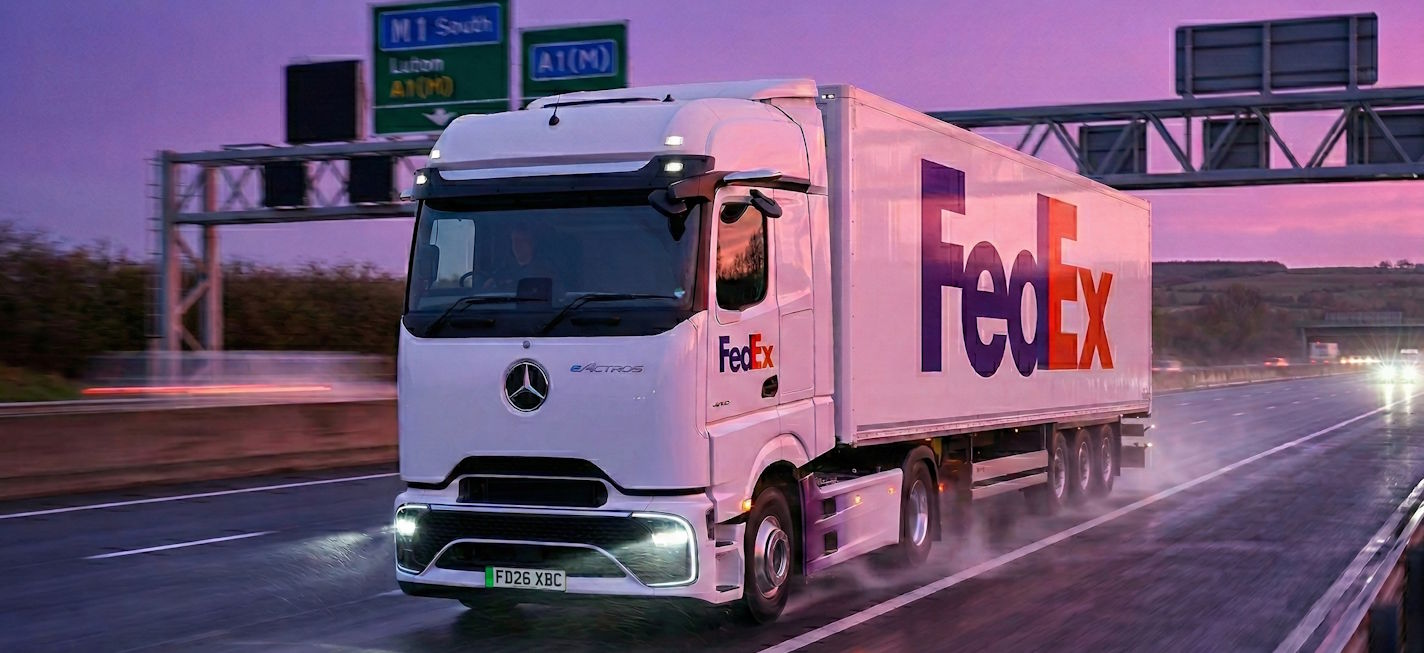
    A 6-Week PoC with FedEx European Linehaul

    Executive Summary

    Decision Intelligence moves an organisation beyond the fixed-plan trap toward proactive, automated resilience in route optimisation. By evaluating the strategic trade-offs between explainable Stochastic Optimisation and scalable Reinforcement Learning, we proved that move-level agility is the key to maintaining flow in a high-uncertainty environment.

    Key Takeaways:

    • Beyond Rigid Scheduling: Shifting from historical templates to dynamic, operational-time decision-making to maximise capacity utilisation.
    • The Technical Showdown: Comparing the audit trails of Stochastic Programming against the autonomous adaptability of Reinforcement Learning.
    • Predictive Simulation: Utilising a road-based “digital sandbox” to test courses of action and mitigate risks before committing resources.
    • Tangible ROI: Delivering financial returns by improving linehaul utilisation and significantly reducing the need for costly ad-hoc transport.

    The Challenge: The Friction of Fixed Planning

    In the high-stakes corridors of European logistics, fixed plans are often the first casualty of reality. For an Operations Director managing a distribution network across the UK and EU, the daily friction is visceral. You are constantly forced to ask: “Should I delay this trailer, so it leaves full, or stick to the schedule? Do I need to commission an expensive ad-hoc truck to cover this surge, or will the bottleneck clear itself?”

    When package volumes fluctuate unpredictably at major hubs, static schedules become more than just an inconvenience—they become a drain on margins and a threat to service levels. At Decision Lab, we operate under a foundational truth: the success of an organisation is nothing but the sum of all its decisions. To help global leaders move beyond the fixed-plans trap, we conducted a six-week Proof of Concept (PoC) with FedEx. This project tackled real-world complexity head-on, proving that Decision Intelligence is the key to transitioning from reactive firefighting to proactive, automated resilience.

    Static Schedules are the Enemy of Efficiency

    The core challenge identified within FedEx’s European network was the inherent limitation of pre-defined linehaul schedules. These schedules were designed for averages, whereas logistics are often defined by exceptions. When incoming and outgoing package volumes at European hubs diverged from the forecast, rigid plans could not adapt.

    A dynamic approach, powered by operational-time decision-making, is the only way to maintain flow in a volatile environment. By rerouting assets and scheduling departures based on real-time parcel traffic rather than historical templates, an organisation can achieve step-changing improvements in capacity utilisation.

    Our expertise in AI, ML, simulation, and mathematical optimisation helps organisations cut through complexities in strategic, tactical and operational processes.

    The Solution: Bridging the Gap with Decision Intelligence

    The choice between technical approaches is rarely straightforward; in this case it was a strategic balancing act between Explainability and Scalability. During our PoC, we evaluated two competing methodologies: explainable Stochastic Programming and scalable Reinforcement Learning (RL).

    FeatureStochastic ProgrammingReinforcement Learning (RL)
    Primary StrengthFast solving speed; mathematically explainable and provable.Reacts to high uncertainty using World Models and Graph Neural Networks.
    Logic BasisLocates the best strategy to optimise expected outcomes over uncertainty.Uses a dynamics model to predict the optimum next action.
    AdaptabilityMulti-objective handling: Uniquely suited for balancing cost vs. customer service levels.Observation-size invariant: Handles environments with variable data lengths and network nodes.
    Strategic RiskConsulting intensive: Very sensitive to human-built heuristics, which are expensive and time-consuming to develop.Compute intensive: Requires significant hardware resources for training the World Model.

    While Stochastic Programming offers a clear audit trail for every decision, RL provides the adaptability required for massive, interconnected networks. The right choice depends on whether your organisation prioritises a provably optimal solution or a highly performant best-effort that can autonomously learn the shifting dynamics of global markets.

    Don’t Just Predict—Simulate the Impact

    One of the most powerful tools developed for FedEx was a road-based, hub-to-hub package movement simulator. This provides a digital sandbox where controllers can explore alternative COAs (Courses of Action) before committing resources.

    Our completely data-driven deployment method allows us to build these simulations without the months of manual coding traditionally required. By accessing relevant operational and transport data directly, we can simulate supply chain environments to predict the ripple effects of a delay or reroute.

    This tool predicts the impact of different actions, helping to mitigate risks and optimise routes.

    Data Maturity is the Ultimate Competitive Moat

    For large-scale firms with a £200M+ turnover, the transactional backbone—usually an ERP or MRP system like SAP or Oracle—is necessary but insufficient. To achieve true antifragility, you must layer Decision Intelligence over these systems.

    Antifragility is the ability to not just survive volatility, but to actually improve because of it. By utilising a World Model within an RL framework, the system treats every fluctuation in package volume as a learning opportunity, refining its dynamics model to better anticipate future shocks. This requires three layers of data maturity:

    • Strategic Level: Long-term high-level routes, fleet capacity, and cost-per-mile data.
    • Operational Level: Real-time visibility into items currently loaded or waiting at the depot.
    • Historical Level: Deep archives of how volumes fluctuated in similar time slots in the past.

    The Result: Antifragility and Bottom-Line Returns

    In the C-suite, the value of AI is measured by the bottom line. The FedEx project was not an academic exercise; it was focused on delivering the financial returns demanded by an industry with tight margins. The PoC demonstrated that an autonomous planning agent directly impacts:

    • Improved Linehaul Utilisation: Driving higher Overall Equipment Effectiveness (OEE) across the fleet.
    • Reduced Rescheduling: Eliminating the administrative friction and cost of mid-stream plan changes.
    • Minimised Ad-hoc Linehauls: Directly de-risking Operational Expenditure (OPEX) and informing more accurate Capital Expenditure (CAPEX) by reducing the need for emergency transport.

    Conclusion: Toward the Global Digital Twin

    The ultimate evolution of this journey is an advanced road-based package movement digital twin. By connecting multiple hubs in real-time, organisations can create a living model of their entire network that learns, adapts, and optimises itself.

    What is the sum of your organisation’s decisions? How many of your current logistics choices are being left to a fixed plan that no longer fits your reality? In a world of increasing volatility, the goal is no longer just to have a plan—it is to have a system that provides decision clarity and reliable value.

    Transform your logistics operations today. Reach out directly via out contact page, or connect with us on LinkedIn to start a conversation about de-risking your future.


  • Why LLMs Aren’t Enough: Engineering Antifragile Operations with Composable Decision Intelligence

    Why LLMs Aren’t Enough: Engineering Antifragile Operations with Composable Decision Intelligence

    As we navigate the technological landscape of 2026, Generative AI has undoubtedly transformed the way we interact with information. Chatbots and Large Language Models (LLMs) have proliferated across enterprise software, streamlining communication and automating basic workflows. However, for operations and supply chain leaders in complex, capital-intensive industries like FMCG, Automotive, and Retail manufacturing, a stark reality is emerging: LLMs are not a silver bullet.

    While language models excel at processing text, they cannot single-handedly optimise a global supply chain network, nor can they provide the quantitative assurance needed to de-risk a £50m factory expansion. When dealing with physical realities, extreme market volatility, and fragmented legacy systems, text prediction is insufficient.

    By 2026, 75% of Global 500 companies will apply decision intelligence practices

    Gartner

    The definitive competitive edge in 2026 belongs to those looking beyond Generative AI toward Decision AI. It belongs to organisations thoughtfully advancing their tech stack and building on established capabilities to embrace the architecture of a Composable Decision Intelligence Platform (DIP).

    The Industrial Reality: High Stakes and High Volatility

    Traditional planning systems struggle to account for agile and accelerated business and the consequent hazards. Today’s supply chain and operations leaders are caught in a crossfire of overlapping challenges, two of the most critical being:

    • Demand & Supply Volatility: SKU proliferation, shifting consumer behaviours, and frequent supply chain disruptions are breaking static planning models. The inability of legacy systems to cope with this extreme volatility inevitably results in poor service levels, excess inventory, and spiralling costs.
    • High-Stakes CAPEX Uncertainty: Securing funding for major capital investments—whether a new automated line, a facility expansion, or rationalising a post-merger manufacturing network—requires robust, data-driven justification. Without quantitative assurance, it is incredibly difficult to de-risk these investments and guarantee ROI.

    Solving these multi-dimensional problems requires more than just analysing past data; it requires a platform capable of simulating the future and discovering the optimal path forward.

    The Path to Implementation: A Composable Architecture

    At Decision Lab, we deliver Decision Intelligence to help leaders master this uncertainty. We achieve this not through a rigid, black-box AI model, but by building a Composable Decision Intelligence Platform based on responsible AI TRiSM principles.

    Composability is the principle that enables businesses to be agile. Rather than relying on a single vendor’s inflexible suite, a composable DIP orchestrates best-in-class, modular capabilities that ingest data from fragmented ERP, MES, and WMS systems. This creates a unified, dynamic view—an AI Simulation Twin.

    The Strategic Advantage of the AI Simulation Twin

    Instead of waiting years for a fully instrumented, hardware-dependent Digital Twin, leading organisations are accelerating their time-to-value by deploying an AI Simulation Twin.

    Traditional Digital Twin programmes often stall in pilot purgatory due to immense IoT integration challenges, prohibitive hardware costs, and fragmented legacy data pipelines. A Simulation Twin, while still ingesting real data, fundamentally bypasses these immediate infrastructure hurdles. It delivers the core predictive and prescriptive advantages now—providing a high-fidelity virtual environment to solve urgent CAPEX and operational bottlenecks—while your physical IoT maturity can be developed as a separate, parallel track. This decoupling ensures you realise ROI in months, rather than years, before moving into the four pillars of the platform:

    Infographic of the four pillars of a composable decision intelligence platform.

    1. The Cognitive Engine: Autonomous AI Agents

    Agentic AI serves as the reasoning layer of the platform. These agents can interpret complex scenarios, model market volatility, and process multi-tiered supply chain dynamics, translating raw data into actionable context.

    2. The Virtual Sandbox: Simulation

    To understand a complex physical network, you must be able to interrogate it and test it. Practically, that means replicating it. We use simulation to build a high-fidelity digital twin environment, employing appropriate technologies, such as AnyLogic’s multi-method capabilities. A simulation maps constraints, machines, and distribution nodes, providing the holistic view necessary to test what-if scenarios safely. It answers critical CAPEX questions before money is spent.

    3. The Mathematical Engine: Optimisation

    Where simulation shows you what could happen, optimisation dictates what should happen. For us, that means employing mathematical optimisation, such as Gurobi’s world-class mathematical solver, to cut through millions of potential permutations. It discovers the mathematically perfect production schedules and inventory policies—maximising throughput and service levels while minimising duplicated costs. The key is being timely—it is no good getting the answer after it was needed. Gurobi’s speed is key here (Gurobi white paper on solver speed).

    4. The Continuous Learning Loop: Reinforcement Learning

    This is where the platform moves from a passive analytical tool to an active operational asset. By applying Reinforcement Learning, specifically leveraging AgileRL, a platform can learn from real-time feedback. It continually experiments within the simulation, discovering new strategies to navigate supply shocks or demand spikes as they happen.

    Engineering the Antifragile Supply Chain

    The ultimate goal of implementing a Composable Decision Intelligence Platform is to shift operations from a state of fragility to one of Antifragility.

    A robust system merely survives a shock. An antifragile operational system improves when exposed to volatility. When a sudden supply chain disruption occurs, the reinforcement learning algorithms immediately assess the new reality within the simulation, trigger the optimisation engine to recalculate the best path, and deploy autonomous agents to orchestrate a self-adapting response. Relying on singular AI models or monolithic ERPs to solve complex physical problems is being consigned to the past.

    For leaders navigating constant disruption, true agility requires an adaptable, composable ecosystem. By implementing a Decision Intelligence Platform, you gain the foresight not just to predict the future, but to engineer your position—a compelling competitive advantage now and for the future.

    To find out more, check out our case studies or contact us!

  • Bold Choices in an Uncertain World

    Bold Choices in an Uncertain World

    Why Gurobi’s Latest Keynote is a Blueprint for Antifragility

    In the current landscape of supply chain and operational planning, the search for certainty is a losing battle. Yet, many organisations still build their strategies around static forecasts, hoping the world will comply with their spreadsheets.

    At the recent EMEA Gurobi Summit in Vienna, a different path was illuminated. In their keynote Bold Choices, Proven Methods, Gurobi’s Dr. Kostja Siefen and Ronald van der Velden outlined a comprehensive framework for empowering confident decision-making. They effectively demonstrated that optimisation is not only a tactical tool for efficiency; it is a core method underpinning bold leadership. Their presentation encapsulated what we at Decision Lab recognise as Antifragility and the ability to not just withstand volatility, but to use it to gain a competitive edge.

    While resilience is about surviving a shock, antifragility is about improving because of it. Siefen and van der Velden’s keynote perfectly articulated the mechanics required to build such a system. They argued that to move from tentative planning to bold action, organisations must master three specific areas: challenging the status quo, mastering the projects, and achieving business value.

    Here is how Gurobi’s technical roadmap aligns with the strategic imperative of antifragility.

    Resilience Over Prediction

    One of the most dangerous traps in decision-making is the ‘illusion of certainty’. As noted in the keynote, “failures in planning and strategy often stem from misplaced confidence… rather than from making the ‘wrong’ decision”.

    A fragile system assumes the forecast is correct. An antifragile system, however, relies on a Robustness Strategy. As their presentation articulated, the goal is not to eliminate uncertainty but to design processes that endure when reality diverges from expectations. By moving away from a single, unrealistic scenario and embracing uncertainty-aware optimisation, businesses can design plans that remain effective even when the unexpected happens.

    Evolution Through Pacing

    True antifragility is not achieved through a single ‘big bang’ implementation. It requires an Evolution Strategy, viewing the past and future not as opponents, but as partners.

    The keynote speakers emphasised the importance of a Pacing Strategy, where change is introduced through focused stages that create momentum. Rather than demanding instant perfection, successful optimisation projects ‘start small, learn fast, and adapt’. This iterative approach allows an organisation to absorb stressors, such as data quality issues or stakeholder resistance, and use them to refine the model, making the final solution stronger and more fit for purpose.

    The Art of Adaptive Focus

    In the age of Digital Twins, there is a temptation to model every atom of a supply chain. However, complexity without clarity leads to paralysis. The Gurobi keynote introduced the concept of Adaptive Focus: the practice of purposeful abstraction to create robust output.

    By keeping the level of detail adjustable (by balancing relevance, detail, and time) decision-makers can utilise a ‘zoom lens’ to focus on what truly matters in a crisis. This capability is essential for antifragility; it allows leaders to filter out the noise and make rapid, high-quality decisions based on the relevant constraints of the moment.

    Trust as the Currency of Change

    Perhaps the most critical insight for leadership was that trust drives adoption. No matter how advanced the mathematics, a solution will fail if the humans at the helm do not trust it.

    Gurobi’s Trust Strategy suggests that trust should be an informed stance rather than an emotional leap. By utilising what-if scenarios, explainability, and human-in-the-loop validation, organisations can transform compliance into commitment. When teams trust the ‘black box’, they are empowered to make the bold choices required to navigate volatility.

    AI trust and AI TRiSM, a woman printing to a node network featuring a padlock and a shield with a check mark.

    Building trust in complex systems is essential. See how Decision Lab builds trust into projects from the start using the AI TRiSM framework.

    The Decision Lab Perspective

    The methods outlined by Siefen and van der Velden at the Gurobi Summit confirm that the technology to build antifragile systems is already here. We see the future of supply chain planning as range-based experiment-driven. Indeed, Gartner recently recognised Decision Lab as a representative provider in an Innovation Insight report.

    On the journey from fragile, through resilient, to antifragile, we recognise the speed and power of Gurobi’s world-class solver, leveraging its capabilities for solutions to supply chain and defence related challenges. By combining Gurobi’s proven methods with a strategic focus on antifragility, we help our partners stop fearing uncertainty and start using it to their advantage.

    As a Trusted Partner, we offer Gurobi Compass training. It allows teams to integrate solutions and make the most of the solver quickly, whatever challenges they seek to resolve.

    Our Antifragility C-Suite Roadmap for supply chain from Decision Lab CEO David Buxton. Get your copy